Category: MacRumors

Category Added in a WPeMatico Campaign

How to Erase Your Old iPhone Before Trading It In

If you’re planning on trading in your old iPhone for a new one, there are some steps you’ll want to take beforehand to ensure it’s de-linked from your accessories and accounts and that everything on it is erased.

The procedures described below shouldn’t take long to follow, and at the end of it you can rest assured that you have a clean iPhone reset to default factory settings and ready to trade in. Here’s what to do.

Back Up Your iPhone

Before you reset, you should back up your device. You can back up your data to iCloud, but we’d advise you connect your iPhone up to a computer and perform an iTunes backup instead, just to be sure. You can find steps to back up your iPhone by clicking here.

Got an Apple Watch? Time to Unpair

If you’re trading in your iPhone and have an Apple Watch linked to it, you’re going to want to unpair it first. Here’s how.

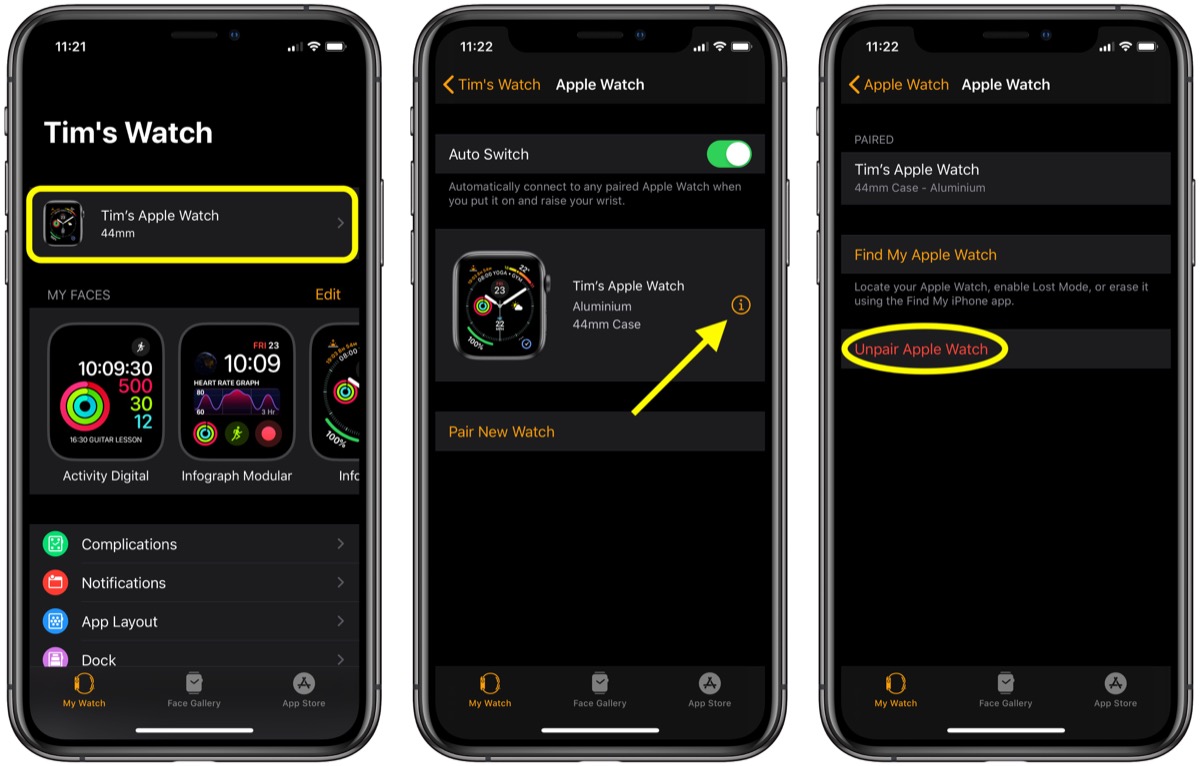
  1. Bring your iPhone and Apple Watch close to each other.
  2. Launch the stock Watch app on your iPhone.
  3. Tap the My Watch tab.
  4. Select the Apple Watch you want to unpair, then tap the info button (the encircled “I”) next to it on the next screen.

    apple watch
  5. Tap Unpair Apple Watch.
  6. Tap again to confirm.
  7. Enter your Apple ID password when prompted to turn off Activation Lock.

Deactivate Services and Log Out Manually

Erasing your iPhone deactivates Find My iPhone and logs you out of all your iCloud and iTunes accounts automatically – in theory. Occasionally we’ve heard cases of erased iOS devices still being linked to Find My iPhone or iCloud accounts.


Whatever the truth of these reports, you can always make doubly sure this won’t happen by deactivating and unlinking these services yourself. To learn how to turn off Find My iPhone, click here. To sign out of iCloud and the iTunes and App Stores, launch the Settings app on your iPhone, tap on your name to open your account settings, tap Sign Out at the bottom, then enter your Apple ID password and tap Turn Off.

How to Factory Reset Your iPhone

Now that you’ve backed up your iPhone and manually deactivated services and accounts, it’s time to perform a factory reset of the device. These steps will guide you through the process.

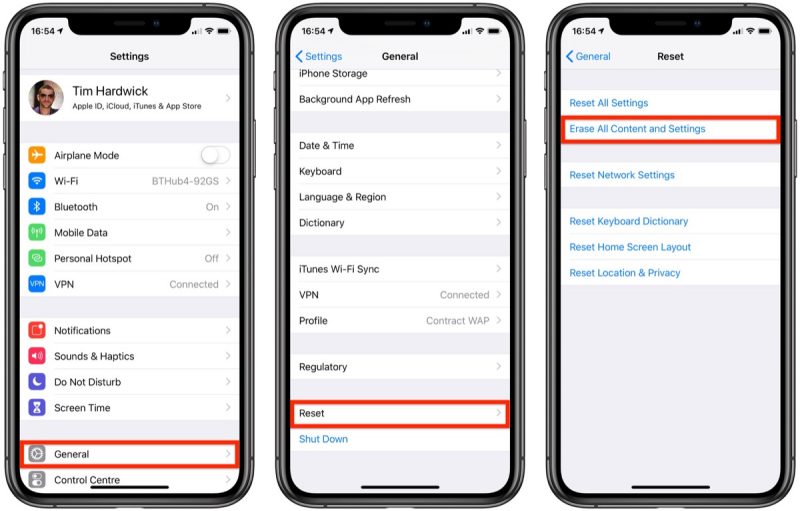
  1. Unlock your iPhone or iPad and launch the Settings app.
  2. Tap General.
  3. Scroll to the bottom and tap Reset.
  4. Tap Erase All Content and Settings.

  5. Tap in your passcode if requested.
  6. Enter your Apple ID password to erase the iPhone and remove it from your account.
  7. Tap Erase.

Allow the reset process to continue – it shouldn’t take any longer than a couple of minutes. Once it’s completed, you’ll see the iOS welcome screen on your iPhone. That’s your green light to trade it in.

Related Roundups: iPhone 11, iPhone 11 Pro

This article, “How to Erase Your Old iPhone Before Trading It In” first appeared on MacRumors.com

Discuss this article in our forums

Powered by WPeMatico

Apple Store Down Ahead of iPhone 11 and iPhone 11 Pro Pre-Orders

Apple’s online store is down in anticipation of iPhone 11 series pre-orders, which begin at the unusual time of 5:00 a.m. Pacific Time this year.

Arguably favoring the east coast this time around, Apple’s U.S. storefront placeholder currently reads: “Staying up late is so last year. The good news is, now you don’t have to. This year, pre-order begins at 5:00 a.m. PDT. See you then.”

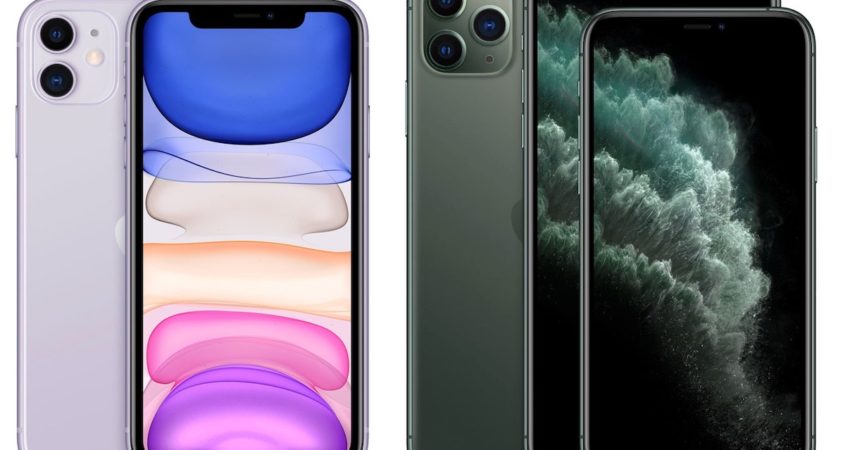
Apple unveiled the iPhone 11 on September 10 with new colors, a dual-lens camera, improved durability, and a faster A13 chip than last year’s iPhone XR, which it replaces.

The successors to the 2018 iPhone XS series are called iPhone 11 Pro and iPhone 11 Pro Max, and feature triple-lens cameras, A13 chips, faster Face ID, Night Mode, shatter resistant glass, improved water resistance and more.

The iPhone 11 is priced at $699 for 64GB of storage, with 128GB of storage available for $749 and 256GB of storage available for $849. iPhone Upgrade Program pricing is available, as are trade-ins to lower prices.

The iPhone 11 Pro is priced at $999 for 64GB of storage, $1149 for 256GB of storage, and $1349 for 512GB of storage. The iPhone 11 Pro Max offers the same storage tiers at price points $100 higher than iPhone 11 pricing ($1099, $1249, and $1449).

Customers who successfully place an order for launch day delivery should receive their devices on Friday, September 20, which is the official release date for the new devices.

Looking further ahead, rumors suggest Apple is planning to release three 5G-capable iPhones in 2020, but in new sizes. Apple is said to be working on 5.4 and 6.7-inch high-end iPhones with OLED displays, which would presumably be the devices to adopt the rumored 3D-capable rear camera systems, and a lower-cost 6.1-inch model with an OLED display.

Are you getting a new iPhone this year or waiting for 2020? Let us know your thoughts in the comments.

Related Roundups: iPhone 11, iPhone 11 Pro

This article, “Apple Store Down Ahead of iPhone 11 and iPhone 11 Pro Pre-Orders” first appeared on MacRumors.com

Discuss this article in our forums

Powered by WPeMatico

iPhone 11 vs. iPhone XR: Which to Buy?

Apple this week unveiled the iPhone 11, the successor to the iPhone XR. At first glance, the two devices have quite a few similarities, but the iPhone 11 takes a step forward in regards to cameras, battery life, and more.

Just the Tech Specs


iPhone 11

  • 6.1-inch LCD display
  • 1792×828 resolution and 326 PPI
  • True Tone display
  • Dual 12-megapixel rear cameras (wide and ultra-wide lenses)
  • Single 12-megapixel front camera
  • Portrait Mode with Depth Control: humans, pets, and objects
  • Six Portrait Lighting effects
  • Next-gen Smart HDR
  • A13 Bionic chip with third-gen Neural Engine
  • Face ID
  • Haptic Touch
  • Lightning connector
  • Fast charging capable: up to 50% charge in 30 minutes
  • Qi-based wireless charging
  • IP68-rated water resistance to a depth of 2 meters for up to 30 minutes
  • 64/128/256GB
  • Dual SIM (Nano-SIM and eSIM)
  • Gigabit-class LTE
  • VoLTE
  • 802.11ax Wi‑Fi with MIMO
  • Bluetooth 5.0

Plus…

  • Night Mode photos
  • Front-facing slo-mo video recording at 120 FPS
  • QuickTake video recording shortcut
  • Dolby Atmos sound
  • U1 chip for spatial awareness


iPhone XR

  • 6.1-inch LCD display
  • 1792×828 resolution and 326 PPI
  • True Tone display
  • Single 12-megapixel rear camera (wide lens)
  • Single 7-megapixel front camera
  • Portrait Mode with Depth Control: humans only
  • Three Portrait Lighting effects
  • Smart HDR
  • A12 Bionic chip with second-gen Neural Engine
  • Face ID
  • Haptic Touch
  • Lightning connector
  • Fast charging capable: up to 50% charge in 30 minutes
  • Qi-based wireless charging
  • IP67-rated water resistance to a depth of 1 meter for up to 30 minutes
  • 64/128GB (256GB discontinued)
  • Dual SIM (Nano-SIM and eSIM)
  • LTE Advanced
  • VoLTE
  • 802.11ac Wi‑Fi with MIMO
  • Bluetooth 5.0

Design

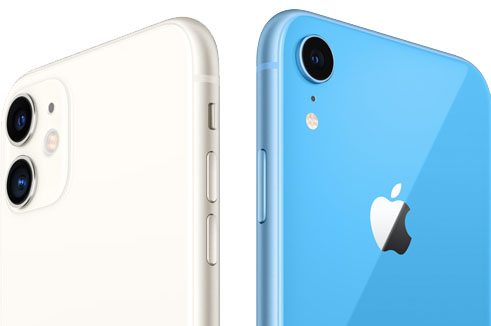
The iPhone 11 has a very similar glass-and-aluminum design as the iPhone XR, with one major visual difference being its new dual-lens rear camera system housed in a large, square camera bump. On the back of the iPhone 11, the Apple logo has been centered, and the “iPhone” brand name is no longer shown.

Otherwise, much is the same, including the display, bezels, notch, antenna bands, volume and side buttons, mute switch, speaker grilles, and microphones. The iPhone 11 also sticks with the Lightning connector.

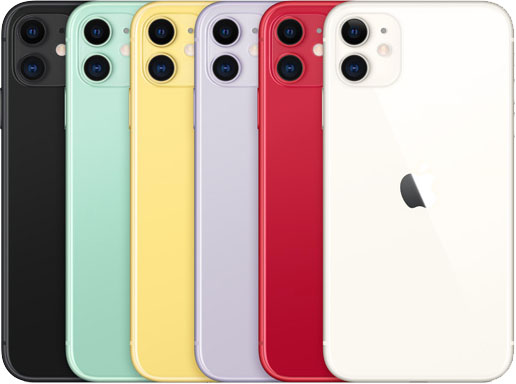
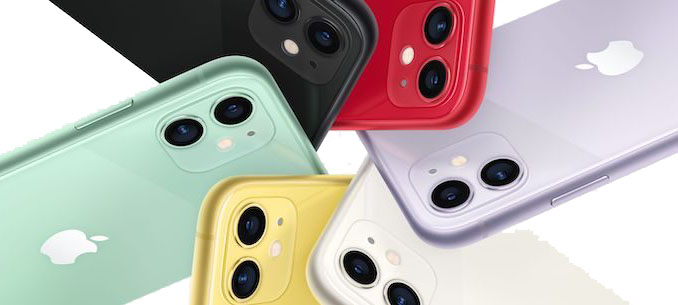
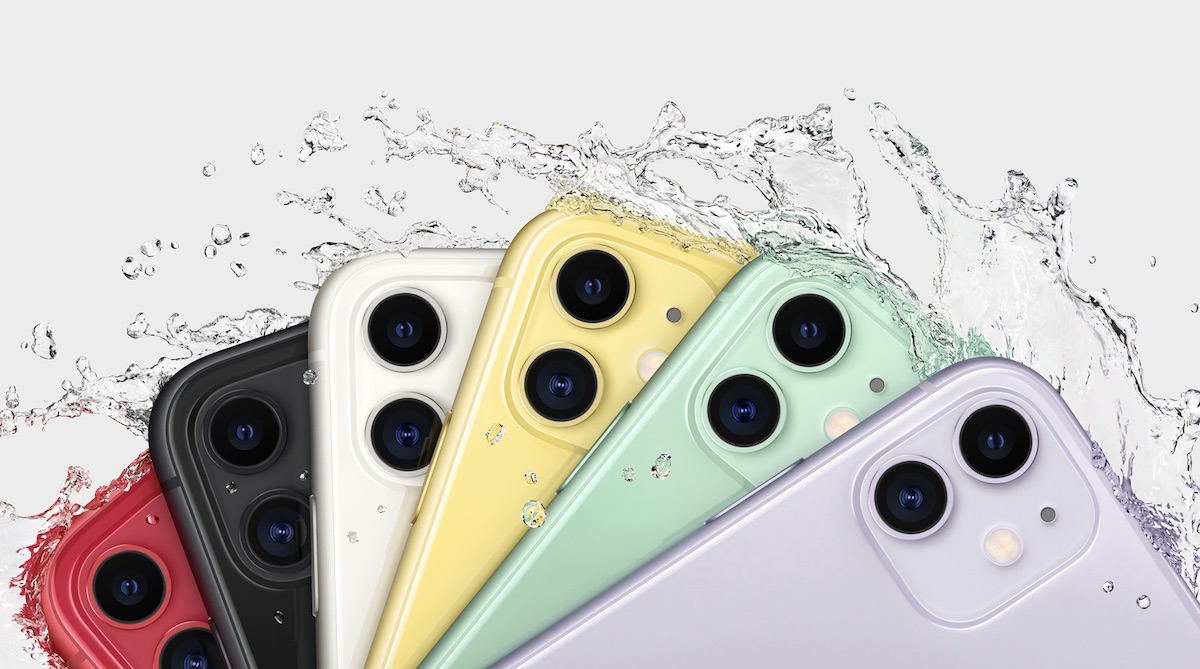
The iPhone 11 comes in six colors, including all-new green and purple and slightly tweaked white, black, yellow, and (PRODUCT)RED options.


Both devices weigh in at just under half a pound and have identical dimensions.

Display

The iPhone 11 has the same 6.1-inch LCD as the iPhone XR, including a resolution of 1792×828 pixels for 326 pixels per inch, 625 nits max brightness, and True Tone and P3 wide color gamut support. The LCD panel keeps costs down compared to the OLED display in the iPhone 11 Pro and iPhone 11 Pro Max.

Like the iPhone XR, the iPhone 11 relies on software-based Haptic Touch for contextual menus and shortcuts. Unlike older iPhones, there is no pressure-sensitive 3D Touch layer built into the iPhone 11‘s display.

Performance

The iPhone 11 is powered by Apple’s latest A13 Bionic chip, which it says is the fastest CPU in any smartphone ever.


Based on 7-nanometer architecture, the A13 Bionic features four high-efficiency cores that are up to 20 percent faster and consume 40 percent less power than the A12 Bionic, and two high-performance cores that are up to 20 percent faster and 30 percent more efficient than the previous chip.

Battery Life

Apple says the iPhone 11 has up to one hour longer battery life than the iPhone XR overall. Based on Apple’s internal testing, the iPhone 11 is rated for up to 17 hours of offline video playback, up to 10 hours of streaming video over Wi-Fi, and up to 65 hours of audio playback per charge.

Like the iPhone XR, the iPhone 11 supports Qi-based wireless charging, as well as fast charging for up to a 50 percent charge in 30 minutes with an 18W or higher USB-C charger. Unfortunately, Apple still includes the same-old 5W charger and Lightning to USB-A cable with the iPhone 11.

Cameras

The rear camera system is easily the iPhone 11‘s biggest upgrade over the iPhone XR. The wide-angle ƒ/1.8 lens is now accompanied by an ultra-wide-angle ƒ/2.4 lens for a 120° field of view. The ultra-wide-angle lens allows users to “zoom out” to “0.5x” and capture four times more scene, according to Apple.

The wide-angle lens also has an updated sensor that enables Night Mode for markedly improved low-light photos that are brighter and have less noise. This feature is similar to Night Sight on Google’s latest Pixel smartphones.


The iPhone 11‘s third-generation Neural Engine enables next-generation Smart HDR for more natural-looking photos. And coming later this fall, it will enable a new Deep Fusion system that uses advanced machine learning for pixel-by-pixel processing of photos, including texture, details, and noise.

Portrait Mode on the iPhone 11 works with not only human faces, but also objects and pets. While this was already possible on the iPhone X, iPhone XS, and iPhone XS Max, Portrait Mode on the iPhone XR is only able to detect humans, although some third-party camera apps like Halide work with objects and pets too.

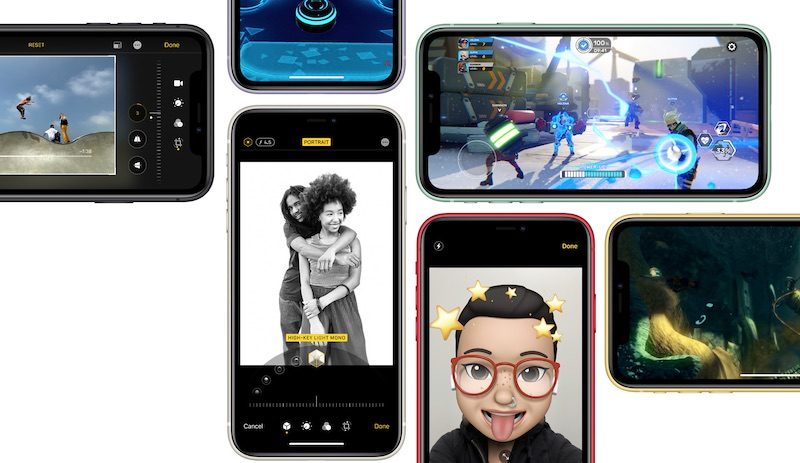
There are also six Portrait Lighting effects available on the iPhone 11, including Natural, Studio, Contour, Stage, Stage Mono, and High‑Key Mono. This is up from three on the iPhone XR: Natural, Studio, and Contour.

And exclusive to the entire iPhone 11 lineup, there is now front-facing slo-mo video recording at 120 FPS.

Connectivity

With both 802.11ax Wi-Fi and Gigabit-class LTE, the iPhone 11 theoretically has faster download speeds, but real-world performance is typically limited by multiple factors such as location and network congestion.

The iPhone 11 also features a new Apple-designed U1 chip that enables ultra-wideband support for improved spatial awareness. The chip enables the iPhone 11 to precisely locate other U1‑equipped Apple devices, such as other iPhone 11 models and reportedly Apple’s rumored Tile-like item tracking tags.

Apple says the U1 chip will “lead to amazing new capabilities.” When iOS 13.1 is released September 30, for example, users will be able to point their iPhone 11 at another iPhone user to AirDrop that person a file.

Storage and Pricing

The iPhone 11 is available in 64GB, 128GB, and 256GB storage capacities for $699, $749, and $849 respectively in the United States. That’s $50 cheaper than the iPhone XR, which at launch was also available in 64GB, 128GB, and 256GB storage capacities for $749, $799, and $899 respectively.

Apple continues to sell the iPhone XR, which now starts at $599, but the 256GB model has been discontinued.

Conclusion

While the iPhone 11 is a rather iterative update to the iPhone XR, users who take lots of photos may find the camera advancements worth spending an extra $100 on. Overall, however, the iPhone XR probably remains the best iPhone for most people, especially at its reduced price of $599.

Related Roundups: iPhone XR, iPhone 11
Buyer’s Guide: iPhone XR (Don’t Buy)

This article, “iPhone 11 vs. iPhone XR: Which to Buy?” first appeared on MacRumors.com

Discuss this article in our forums

Powered by WPeMatico

Apple Announces Billing Grace Period for App Store Subscriptions

Apple today announced a new billing grace period for subscriptions, which will let subscribers who experience unsuccessful auto-renewals continue to use an app’s paid content while Apple attempts to collect payment.

This will be a useful feature for developers as customers who do not immediately update their billing when a subscription fee becomes due can currently lose access to premium features right away.

Apple’s new option is designed to provide a short period in which customers can still access those premium features while giving them time to fix the billing problem. Grace periods will vary based on subscription length.

Subscriptions that last a week will have a six day grace period, while all longer subscriptions will have a 16 day grace period.

Apple says that there will be no interruption to a subscriber’s days of paid service or to a developer’s revenue if payment is successful within the new grace period.

You can now enable Billing Grace Period for your apps with auto-renewable subscriptions in App Store Connect. Billing Grace Period allows you to let subscribers whose auto-renewal has failed due to a payment issue continue accessing your app’s paid content for a period of time while Apple attempts to collect payment. There won’t be any interruption to the subscriber’s days of paid service or to your revenue if Apple is able to recover the subscription within the grace period.

Developers who have subscription apps are now able to implement support for the new billing grace period.

This article, “Apple Announces Billing Grace Period for App Store Subscriptions” first appeared on MacRumors.com

Discuss this article in our forums

Powered by WPeMatico

iPhone 11 vs. iPhone 11 Pro: Which to Buy?

Apple’s latest iPhones, the iPhone 11 and iPhone 11 Pro, are nearing their release dates on September 20. Apple is separating the new smartphones into its usual low-cost versus high-cost categories, with big differences between the two models coming down to the camera, display, and battery life.

Just the Tech Specs

Below you’ll find tech specs for iPhone 11 and iPhone 11 Pro, with each difference bolded.


iPhone 11

  • 6.1-inch LCD display
  • Battery lasts up to 1 hour longer than iPhone XR
  • 1792×828 resolution and 326 PPI
  • True Tone display
  • Dual 12-megapixel rear cameras (wide and ultra-wide lenses)
  • Single 12-megapixel front camera
  • Portrait Mode with Depth Control: humans, pets, and objects
  • Six Portrait Lighting effects
  • Next-gen Smart HDR
  • A13 Bionic chip with third-gen Neural Engine
  • Face ID
  • Haptic Touch
  • Lightning connector
  • Fast charging capable: up to 50% charge in 30 minutes
  • Qi-based wireless charging
  • IP68-rated water resistance to a depth of 2 meters for up to 30 minutes
  • 64/128/256GB
  • Dual SIM (Nano-SIM and eSIM)
  • Gigabit-class LTE
  • VoLTE
  • 802.11ax Wi‑Fi 6 with MIMO
  • Bluetooth 5.0
  • Night Mode photos
  • Front-facing slo-mo video recording at 120 FPS
  • QuickTake video recording shortcut
  • Dolby Atmos sound
  • U1 chip for spatial awareness


iPhone 11 Pro

  • 5.8-inch OLED display
  • Battery lasts up to 4 hours longer than iPhone XS
  • 2436×1125 resolution and 458 PPI
  • True Tone display
  • Triple 12-megapixel rear cameras (wide, ultra-wide, and telephoto)
  • Single 12-megapixel front camera
  • Portrait Mode with Depth Control: humans, pets, and objects
  • Six Portrait Lighting effects
  • Next-gen Smart HDR
  • A13 Bionic chip with third-gen Neural Engine
  • Face ID
  • Haptic Touch
  • Lightning connector
  • Fast charging capable: up to 50% charge in 30 minutes
  • Qi-based wireless charging
  • IP68-rated water resistance to a depth of 4 meters for up to 30 minutes
  • 64/256/512GB
  • Dual SIM (Nano-SIM and eSIM)
  • Gigabit-class LTE
  • VoLTE
  • 802.11ax Wi‑Fi 6 with MIMO
  • Bluetooth 5.0
  • Night Mode photos
  • Front-facing slo-mo video recording at 120 FPS
  • QuickTake video recording shortcut
  • Dolby Atmos sound
  • U1 chip for spatial awareness

iPhone 11 Pro Max specs identical to 11 Pro, except…

  • 6.5-inch OLED display
  • Battery lasts up to 5 hours longer than iPhone XS Max (longest battery in an iPhone)
  • 2688×1242 resolution and 458 PPI

Design

Although they look very similar, the iPhone 11 is made with an aluminum frame and both the front and back are made of glass. The iPhone 11 Pro has the same glass build as the iPhone 11, but with a premium matte finish on the back of the device. Instead of an aluminum frame, its frame is made of stainless steel.

For all three 2019 iPhones, Apple claims that its glass is the “toughest glass found in a smartphone,” and promises durability if you happen to drop or otherwise accidentally harm your iPhone. For both smartphones, the square camera bump has a polished glass finish.

The iPhone 11 is 5.94 inches tall, 2.98 inches wide, and 0.33 inches thick, with a weight of 6.84 ounces. The iPhone 11 Pro is ever slightly smaller at 5.67 inches tall, 2.81 inches wide, and 0.32 inches thick, with a weight of 6.63 ounces. Of course, the iPhone 11 Pro Max is the biggest of the bunch at 6.22 inches tall, 3.06 inches wide, and 0.32 inches deep, at a total weight of 7.97 ounces.
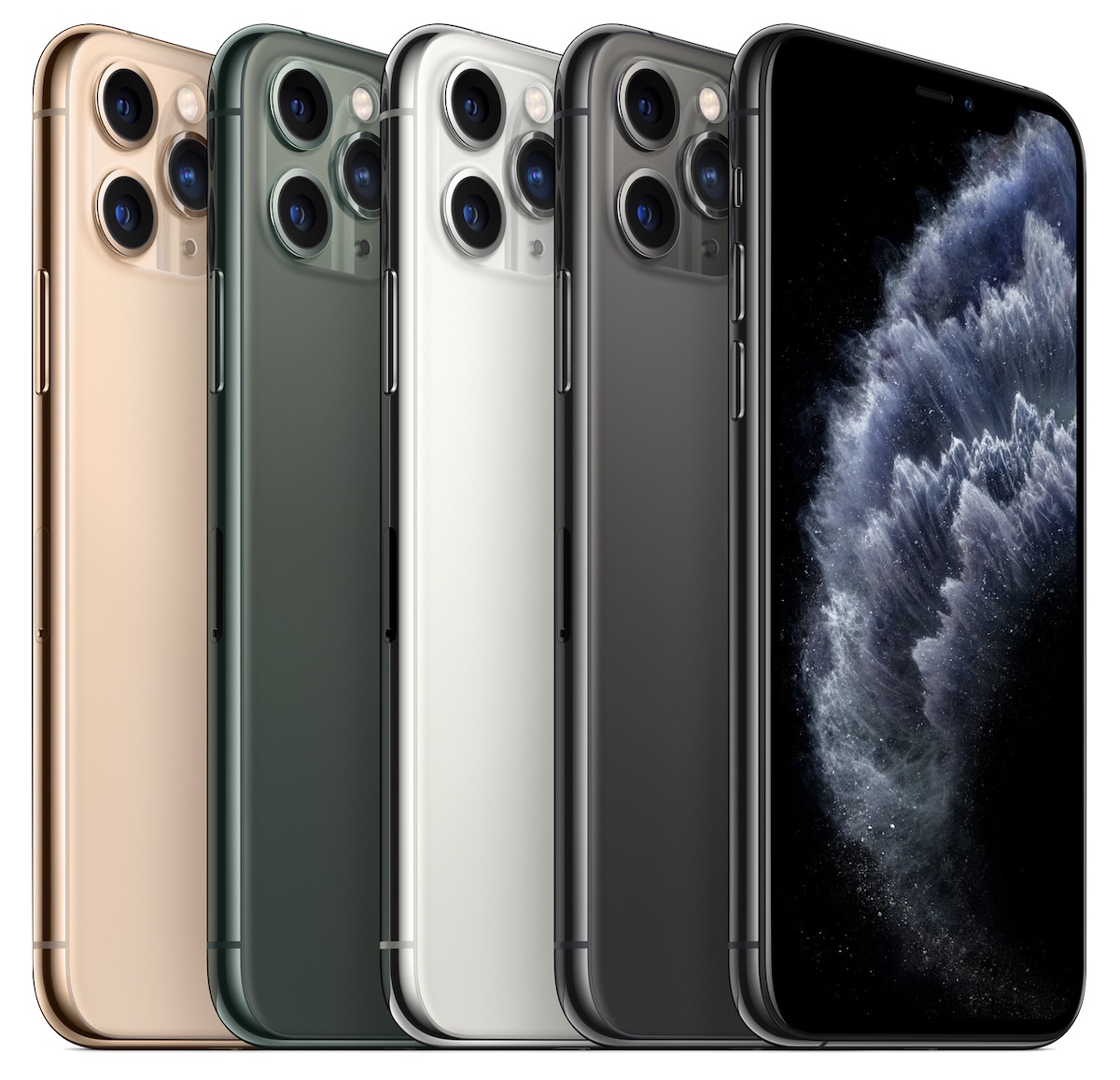

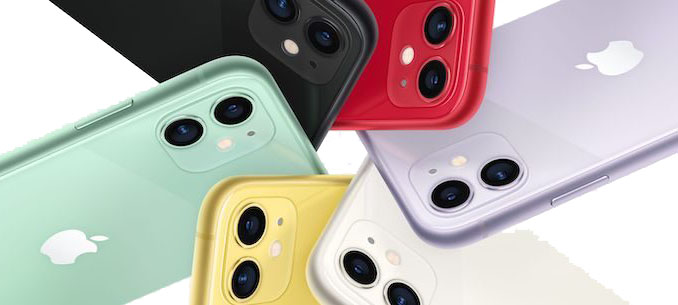
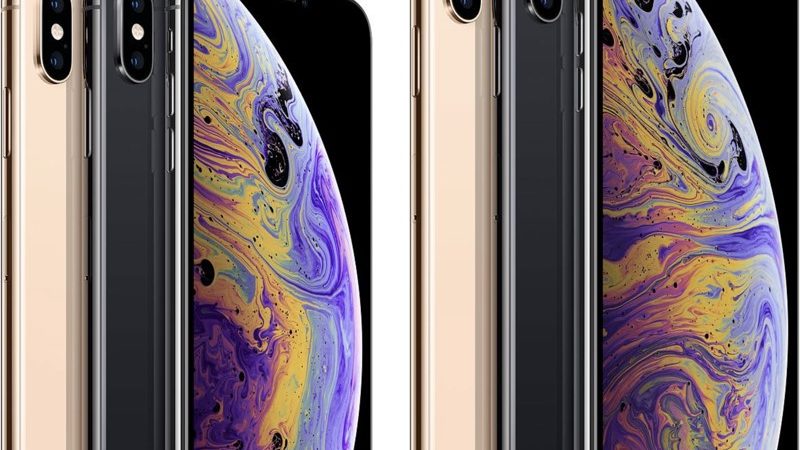
The iPhone 11 comes in Purple, Yellow, Green, Black, White, and Product Red. The iPhone 11 Pro comes in Midnight Green, Silver, Space Grey, and Gold. All models have the same front-face notch, bezels, antenna bands, volume and side buttons, mute switch, speaker grills, microphones, and Lightning port.

Display

The iPhone 11 sports a 6.1-inch “Liquid Retina HD” LCD display, while the iPhone 11 Pro family has a sharper “Super Retina XDR” OLED display. While the LCD on the iPhone 11 provides true-to-life colors, the OLED on the iPhone 11 Pro is brighter in sunlight, can display true blacks and more detail in bright areas, and is able to support HDR movies on iTunes.
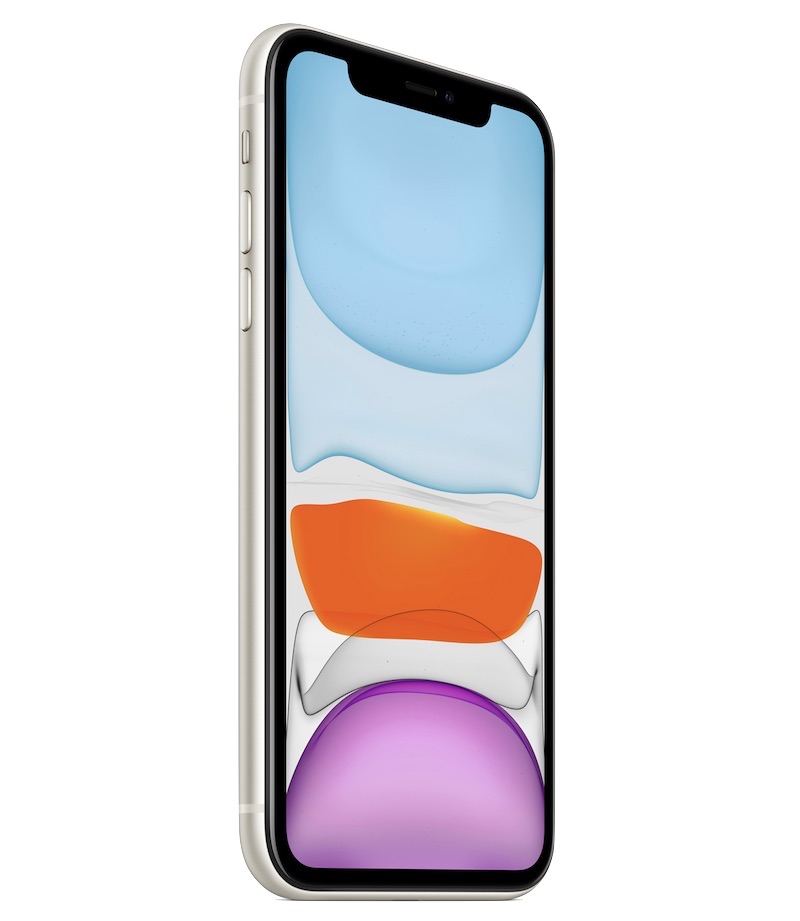

Specifically, the iPhone 11 reaches 625 nits max brightness while the iPhone 11 Pro reaches 800 nits max brightness. Both models support True Tone and Haptic Touch, but neither has support for 3D Touch, which Apple has abandoned this generation. 3D Touch provided pressure-sensitive feedback for shortcuts throughout iOS, and Haptic Touch is the somewhat similar replacement for it, without the hardware-based feedback.

The LCD display is mainly how Apple can keep the cost of the iPhone 11 down in comparison to the iPhone 11 Pro and 11 Pro Max, but it’ll be more than sufficient for most users who use their iPhone to casually browse social media apps and stay connected with friends and family through Messages.

Performance

Both the iPhone 11 and iPhone 11 Pro are powered by Apple’s A13 Bionic chip, which the company claims to be the fastest CPU ever in a smartphone.

In detail, the A13 Bionic features four high-efficiency cores that are up to 20 percent faster and consume 40 percent less power than the A12 Bionic, and two high-performance cores that are up to 20 percent faster and 30 percent more efficient than the previous chip.

Battery Life

This leads to improved battery life on the 2019 iPhones thanks to the more efficient A13 Bionic chip. The iPhone 11 has up to one hour longer battery life than the iPhone XR (its direct predecessor). Based on Apple’s internal testing, the iPhone 11 is rated for up to 17 hours of offline video playback, up to 10 hours of streaming video over Wi-Fi, and up to 65 hours of audio playback per charge.

The iPhone 11 Pro has up to four hours longer battery life than the iPhone XS, rated for up to 18 hours of offline video playback, up to 11 hours of streaming video over Wi-Fi, and up to 65 hours of audio playback per charge.
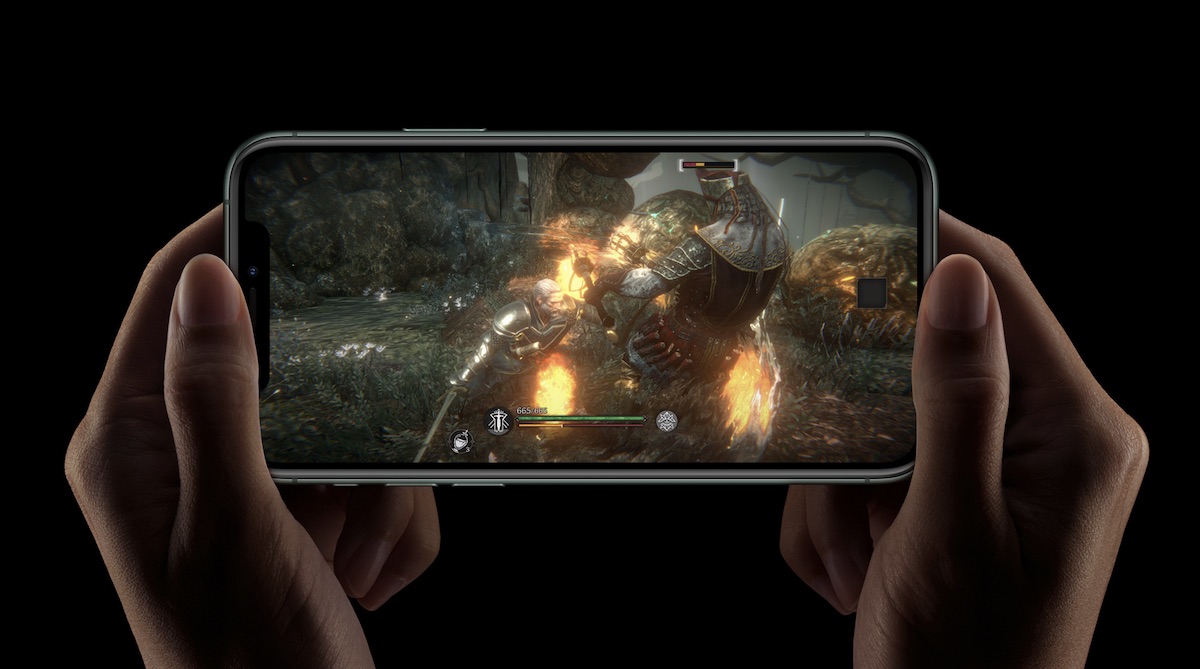

The iPhone 11 Pro Max has the longest battery life in an iPhone to date, lasting up to five hours longer than the iPhone XS Max. It’s rated for up to 20 hours of offline video playback, up to 12 hours of streaming video over Wi-Fi, and up to 80 hours of audio playback per charge.

All three models support wireless charging on any Qi-compatible mat, as well as fast charging via 18W or higher USB-C charger and Lightning to USB-C cable. This will net you up to a 50 percent charge in 30 minutes. Notably, the iPhone 11 Pro and 11 Pro Max include an 18W charger and Lightning to USB-C cable in the box, but the iPhone 11 does not include these upgraded accessories and instead comes with the previous 5W charger and Lightning to USB-A cable.

Cameras

Besides the display, the camera is one of the biggest differences between the iPhone 11 and iPhone 11 Pro, but you’ll still be getting a solid smartphone camera on either device.

To start, the iPhone 11 has a dual 12-megapixel camera system, with wide (ƒ/1.8 aperture) and ultra wide (ƒ/2.4 aperture) lenses. With ultra wide, you can “zoom out” to 0.5x without physically moving, and capture more of a scene in the process.
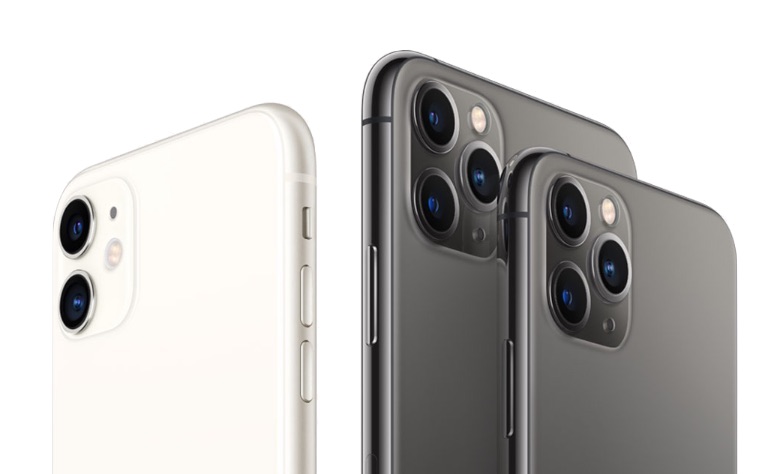

It also supports the new Night Mode for improved low-light images, Auto Adjustments, optical image stabilization, digital zoom up to 5x, 2x optical zoom out, brighter True Tone flash with Slow Sync, Portrait Mode with six effects, and Smart HDR.

Comparatively, the iPhone 11 Pro camera’s main difference is found in its third telephoto camera (ƒ/2.0 aperture). This means the 11 Pro family has three total lenses: ultra wide, wide, and telephoto. You’ll also get dual optical image stabilization, 2x optical zoom in, 2x optical zoom out, and digital zoom up to 10x.
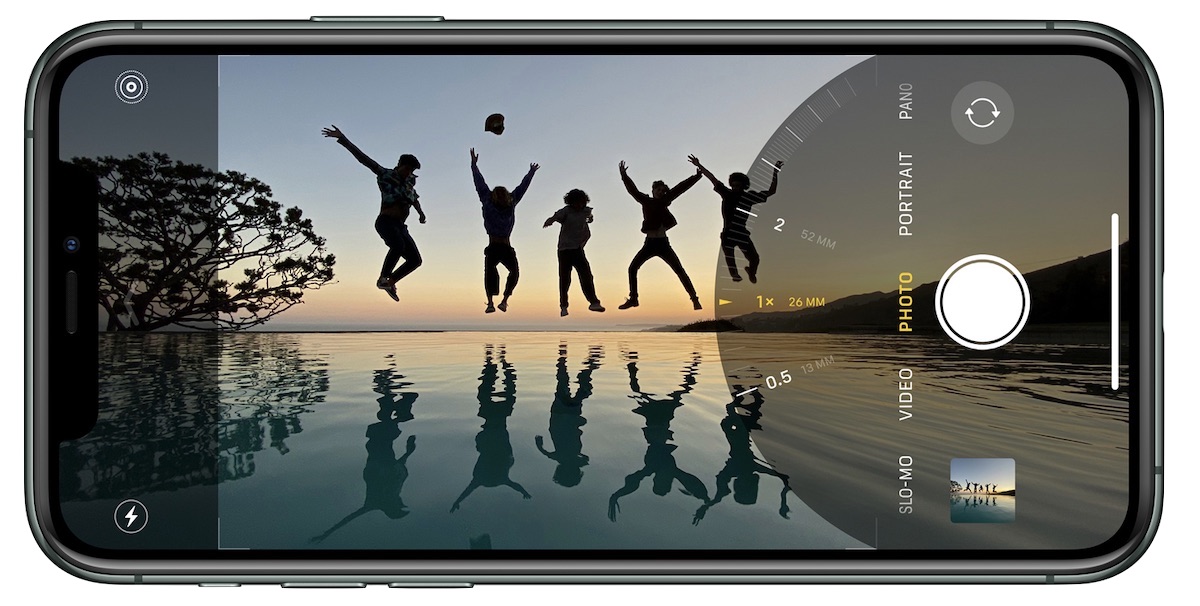

The main advantage of the telephoto lens are that it allows for zooming in on distant subjects without losing much clarity in the image. Apple said that this can be seen when taking images of wildlife from afar, or when you’re at a sporting event.

Across the iPhone 11 family of devices, you’ll be able to use Apple’s “slofies” (aka slow-motion selfies on the front-facing camera); gain access to all six Portrait Lighting effects; and take Portrait Mode photos of humans, objects, and pets.

They also all include Apple’s third-generation Neural Engine, enabling next-generation Smart HDR for more natural-looking photos. Later this fall, it will enable a new Deep Fusion system that uses advanced machine learning for pixel-by-pixel processing of photos, including texture, details, and noise.

Connectivity

Both the iPhone 11 and iPhone 11 Pro include 802.11ax Wi-Fi and Gigabit-class LTE, meaning that in terms of cellular performance all models of the 2019 iPhone should see similar statistics.

They both include Bluetooth 5.0 support and have NFC readers to support Apple Pay. On the new side of things, Apple has included its in-house designed U1 chip to enable ultra-wideband support for improved spatial awareness.

In a practical sense, this means that iPhone 11 and iPhone 11 Pro can precisely locate other U1-equipped Apple devices. With iOS 13.1, for example, you’ll be able to point your iPhone 11 to another iPhone to AirDrop a photo or file.

Storage and Pricing

You can purchase the iPhone 11 in 64GB, 128GB, and 256GB storage capacities, priced at $699, $749, and $849 respectively in the United States.
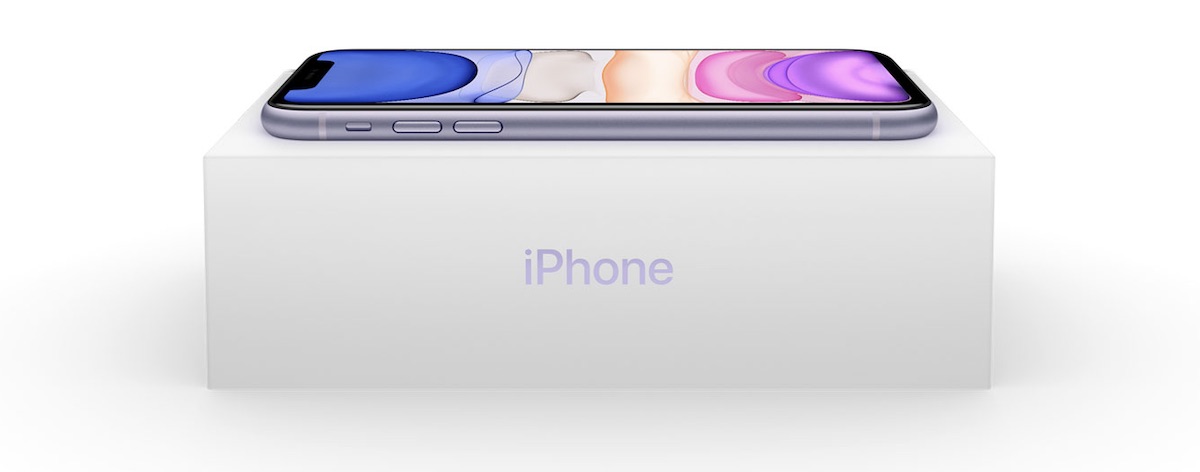

The iPhone 11 Pro is available in 64GB, 256GB, and 512GB, priced at $999, $1,149, and $1,349 respectively in the United States.

Lastly, the iPhone 11 Pro Max is available in 64GB, 256GB, and 512GB, priced at $1,099, $1,249, and $1,449 respectively in the United States.

Conclusion

Apple continues to offer a nice array of iPhones across the price spectrum for customers, who will have to decide whether the “pro” upgrades are worth the price. At $999 for entry-level pricing, the iPhone 11 Pro has the same great camera of the pricier 11 Pro Max models, along with the OLED display and improved battery life compared to the previous generation.

Still, those advantages might not be worth the $300 upcharge from the entry-level iPhone 11, which still offers a solid camera, Face ID, a True Tone LCD display, and more color options. Because of this, the $699 64GB iPhone 11 will likely remain a more popular option among most 2019 iPhone buyers.

Related Roundups: iPhone 11, iPhone 11 Pro

This article, “iPhone 11 vs. iPhone 11 Pro: Which to Buy?” first appeared on MacRumors.com

Discuss this article in our forums

Powered by WPeMatico

Night Mode and New Cameras in iPhone 11 and 11 Pro Shown Off

Apple’s iPhone 11 and iPhone 11 Pro models both feature upgraded camera systems with some impressive new capabilities, including a Night Mode that’s designed to use Apple’s machine learning and hardware to significantly improve photos captured in low light.

The feature, which is similar to the Google Pixel’s Night Sight mode, was shown off by Apple on stage, but real-world photos have also surfaced today.

Apple’s Night mode demo shot


Canadian model and Nomad Management Modeling Agency founder Coco Rocha recently tweeted a night time shot that compares performance between the iPhone 11 and the iPhone X.


The photos show a drastic difference, with the iPhone 11 shot preserving the full content of the image while the iPhone X produces a photo that’s too dark to be usable.

The iPhone 11, iPhone 11 Pro, and iPhone 11 Pro Max all support Night Mode, which is designed to work without the flash to produce natural, bright photos in low light. A key component of the new Night Mode is the updated Wide camera sensor present in both iPhones.

Night Mode is activated automatically when it’s needed, and Apple has outlined how it works. When you capture a Night Mode image, the camera takes multiple pictures in a row while utilizing optical image stabilization to steady the lens.

From there, the iPhone’s software aligns images to correct for movement, discards sections with too much blur, and fuses sharper images together. Contrast is adjusted for balance purposes, and colors are fine-tuned to look natural. Noise reduction is employed and details are enhanced to produce the final images.

On Instagram, Apple has also been sharing photos that demonstrate the different camera modes available in the iPhone 11 Pro and Pro Max, both of which feature triple-lens camera setups.


These shots demonstrate the capabilities of the telephoto, wide, and ultra wide-angle lenses, with the latter lens being the new option.

The iPhone 11 has a dual-lens camera setup with a wide-angle and ultra wide-angle lens, so while it can do much of what the iPhone 11 Pro can do, it lacks the telephoto lens and the 2x optical zoom that comes with it.


All of the new iPhones support Portrait mode (and in the 11, you can take portraits of non-people, which wasn’t possible with the XR), next-generation Smart HDR, Portrait Lighting, and will soon have a new Deep Fusion feature that Apple says will use pixel-by-pixel processing to optimize for texture, details, and noise.

The new iPhones will go on sale starting tomorrow, September 13, with pre-orders set to kick off at 5:00 a.m. Pacific Time. An official launch will follow on Friday, September 20.

Related Roundups: iPhone 11, iPhone 11 Pro

This article, “Night Mode and New Cameras in iPhone 11 and 11 Pro Shown Off” first appeared on MacRumors.com

Discuss this article in our forums
Powered by WPeMatico

Apple Softens App Store Guidelines Related to Third-Party Ads in Kids Apps and ‘Sign in With Apple’

Apple today updated its App Store Review Guidelines with changes to third-party advertising and analytics in kids apps, as well as additional criteria for when apps are required to use Sign in with Apple.

Kids apps

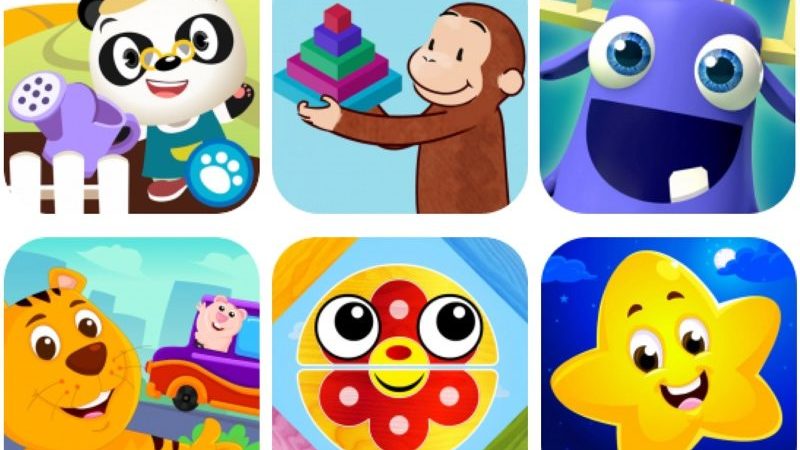
The guidelines now state that, in limited cases, third-party analytics may be permitted in kids apps provided that the services do not collect or transmit any identifiable information about children, such as their name, date of birth, email address, location, or unique device identifier.

Apple says third-party advertising may also be permitted in limited cases, provided that the services have publicly documented practices and policies for kids apps, including human review of ad creatives for age appropriateness.

Apple had previously implied that no third-party ads or analytics would be permitted in kids apps whatsoever, but several developers of kids apps expressed concerns that this would harm their business models, leading Apple to delay the requirements and make the changes announced today.

Moreover, apps in the App Store’s Kids category or those that collect, transmit, or have the capability to share personal information from a minor must include a privacy policy and must comply with all applicable children’s privacy statutes, such as the U.S.’s Children’s Online Privacy Protection Act.

Newly submitted kids apps must follow these guidelines immediately, while existing apps will have until March 3, 2020 to be fully compliant, according to Apple.

“As we got closer to implementation we spent more time with developers, analytics companies and advertising companies,” Apple’s marketing and App Store chief Phil Schiller told TechCrunch. “Some of them are really forward thinking and have good ideas and are trying to be leaders in this space too.”

‘Sign in with Apple’ criteria

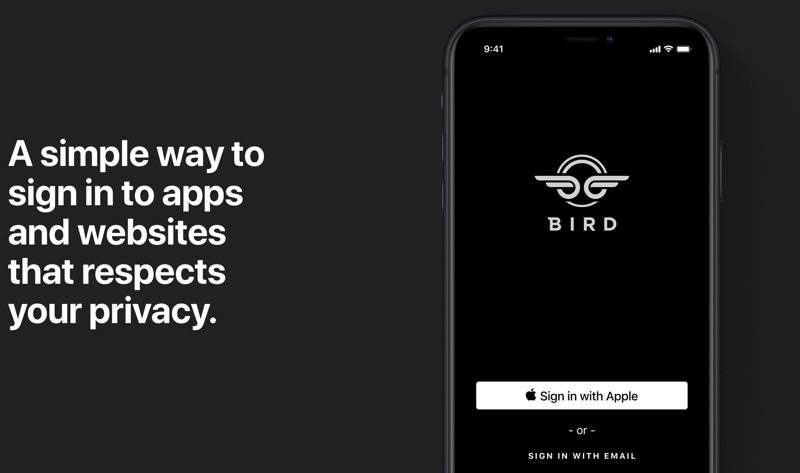
Meanwhile, as previously announced, apps that exclusively use a third-party or social login service such as Facebook, Google, Twitter, LinkedIn, Amazon, or WeChat to set up or authenticate a user’s primary account within the app must also offer Sign in with Apple as an equivalent option.


However, Apple has now clarified that Sign in with Apple is not required if:

– Your app exclusively uses your company’s own account setup and sign-in systems.

– Your app is an education, enterprise, or business app that requires the user to sign in with an existing education or enterprise account.

– Your app uses a government or industry-backed citizen identification system or electronic ID to authenticate users.

– Your app is a client for a specific third-party service and users are required to sign in to their mail, social media, or other third-party account directly to access their content.

Starting today, new apps submitted to the App Store must follow these guidelines for Sign in with Apple. Existing apps must follow them by April 2020.

This article, “Apple Softens App Store Guidelines Related to Third-Party Ads in Kids Apps and ‘Sign in With Apple’” first appeared on MacRumors.com

Discuss this article in our forums
Powered by WPeMatico

Slack Launches Support for Dark Mode on Mac

Slack today launched dark mode for all desktop apps, including Mac, Windows, and Linux. This follows the company previously making dark mode available on iOS back in June.

To find dark mode in Slack on Mac, click on your name in the left sidebar > Preferences > Themes. This will show you a quick preview of how everything will look, and then you can choose to switch to dark mode or stay in light mode.

The company has also added new themes specifically tailored for dark mode, all of which are also available today. There is no required update to see dark mode on Slack, but you’ll need to restart the app to get it to appear.

Slack also confirmed that in the near future you will be able to set Slack to switch automatically between light and dark mode, based on your macOS settings. The company didn’t provide a specific release date for this feature but said it will be available fairly soon.

This article, “Slack Launches Support for Dark Mode on Mac” first appeared on MacRumors.com

Discuss this article in our forums
Powered by WPeMatico

Apple Shares Video Showcasing Apple Arcade Games in 100 Seconds

Apple today shared a new video on its YouTube channel that highlights some of the games coming to Apple Arcade in 100 seconds.


Earlier this week, Apple announced that its subscription-based Apple Arcade gaming service will launch September 19 in over 150 countries. In the United States, pricing is set at $4.99 per month, with a one-month free trial available. This price will apply to individuals or a family of up to six members via Family Sharing.

Featured games and their corresponding timestamps in the video:

[00:00] “Oceanhorn 2: Knights of the Lost Realm” by Cornfox

[00:04] “Towaga: Among Shadows” by Noodlecake

[00:04] “Mosaic” by Raw Fury

[00:04] “Overland” by Finji

[00:05] “Manifold Garden” by William Chyr

[00:05] “Lifeslide” by Block Zero

[00:06] “Where Cards Fall” by Snowman

[00:06] “WHAT THE GOLF” by Fun Plus

[00:06] “ChuChu Rocket! Universe” by SEGA®

[00:07] “Cat Quest II” by Gentlebros

[00:07] “The Enchanted World” by Noodlecake

[00:07] “Hot Lava” by Klei Entertainment

[00:20] “EarthNight” by Cleaversoft

[00:30] “Skate City” by Snowman

[00:42] “Jenny LeClue – Detectivu” by Mografi

[00:53] “LEGO Brawls” by Lego

[01:08] “Sayonara: Wild Hearts” by Annapurna

[01:22] “Sonic Racing” by SEGA®

[01:24] “Pac-Man Party Royale” by Bandai Namco Entertainment Inc.

[01:26] “Frogger in Toy Town” by Konami

[01:27] “Shinsekai: Into the Depths” by Capcom

[01:29] “Cricket Through the Ages” by Devolver

[01:31] “ShockRods” by Stainless Games

[01:32] “Redout: Space Assault” by 34BigThings

[01:33] “Super Impossible Road” by Rogue Games Inc.

[01:34] “Oceanhorn 2: Knights of the Lost Realm” by Cornfox

Apple Arcade will provide iPhone, iPad, Mac, and Apple TV users with access to a library of over 100 games, with no ads or additional in-app purchases. Read our Apple Arcade guide for more details and a preview of the games coming at launch.

This article, “Apple Shares Video Showcasing Apple Arcade Games in 100 Seconds” first appeared on MacRumors.com

Discuss this article in our forums
Powered by WPeMatico

Apple Card Users Will Receive 3% Daily Cash at Walgreens and Duane Reade Pharmacies Starting Tomorrow

Walgreens today announced that, starting Friday, customers will receive 3% Daily Cash when they use the Apple Card with Apple Pay for all eligible health, beauty, personal care, household, and seasonal products they purchase at Walgreens or Duane Reade pharmacy locations, including medicines and prescriptions.

As noted by TechCrunch, the 3% Daily Cash also applies to purchases made in the Walgreens app and on Walgreens.com.

Last month, Apple announced that it would extend 3% Daily Cash to more merchants, and the list now includes Uber and Uber Eats, Walgreens, Duane Reade, and purchases made directly with Apple, including at Apple Stores, Apple.com, the App Store, iTunes, and for subscriptions like Apple Music and iCloud storage.

All other purchases made with the Apple Card via Apple Pay will continue to receive 2% Daily Cash, while purchases made with the physical, titanium Apple Card qualify for 1% Daily Cash anywhere but Apple Stores.

To apply for an Apple Card, simply open the Wallet app on an iPhone running iOS 12.4 or later, tap the plus button in the top-right corner, and follow the on-screen steps. The process takes just a few minutes, and if approved, your digital Apple Card will be ready for purchases immediately.

Daily Cash is unlimited and paid out daily to your Apple Cash account. For more details, make sure to check out our Apple Card guide.

This article, “Apple Card Users Will Receive 3% Daily Cash at Walgreens and Duane Reade Pharmacies Starting Tomorrow” first appeared on MacRumors.com

Discuss this article in our forums
Powered by WPeMatico